Uprooted | 1830–1907
What does it mean to remove a people?
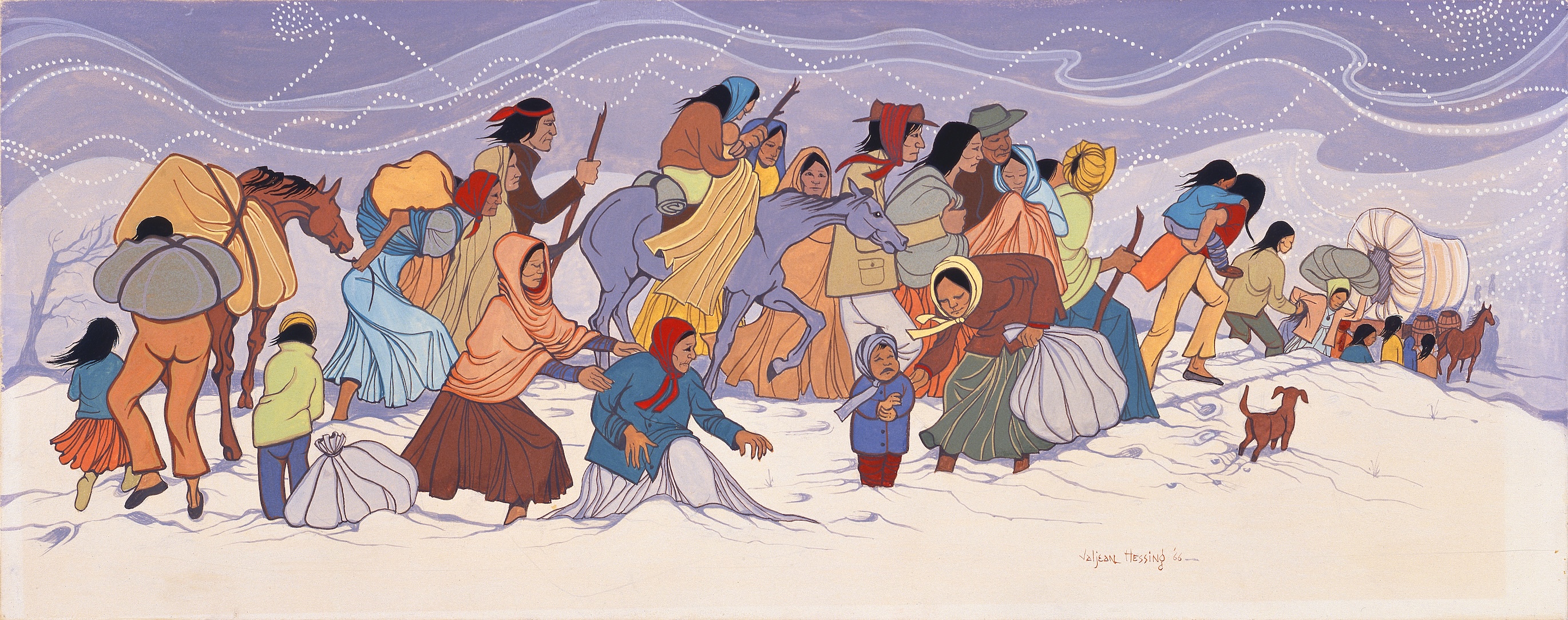
The 1800s were a dark time for First American people. The desire of the United States for land and resources was insatiable. President Andrew Jackson used the 1830 Indian Removal Act to force the mass removal of tribal nations from their lands, from the Gulf Coast to the Great Lakes.
An act of greed, the Indian Removal Act sought to expand US territory beyond the 40 million acres already secured through treaties. The 🔍Cherokee Nation, whose lands were at the center of the debate, brought two legal cases to the Supreme Court, which ruled in favor of tribal sovereignty. President Jackson defied the court’s decision. He ordered the military to forcibly remove nearly 100,000 American Indians.
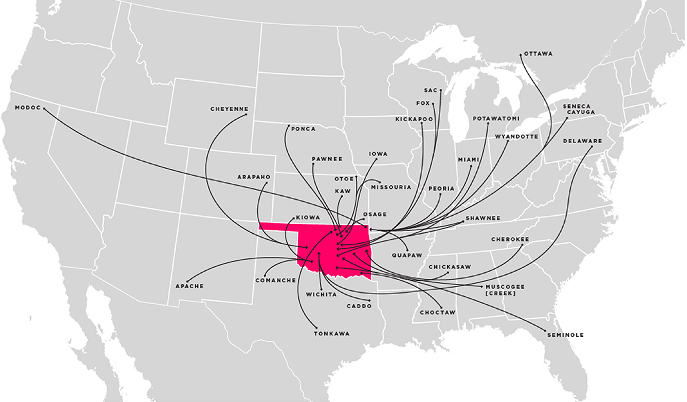
There was not just one great Removal. Each tribe faced expulsion from our homelands. These removals to Indian Territory have become commonly referred to as the “Trail of Tears," though many tribes have their own terms for this ethnic cleansing. Survivors were devastated physically, culturally, socially, economically, and spiritually.
Ultimately, our resilience and adaptability enabled us to survive and persevere.
Three different processes—all brutal—were used to forcibly remove tribal nations to Indian Territory, now known as Oklahoma:
- Local removals occurred in the northeastern seaboard as settlers encroached on tribal lands.
- Systematic removals began in 1830: the Indian Removal Act had an immediate impact on tribes in the Southeast, especially along the Gulf Coast.
- Military removals began after the Civil War. The US Cavalry enforced treaty terms that were unacceptable to our Native nations, including the Plains tribes, the Apache, and 🔍Modoc.
Our tribes remember the stories of our suffering and survival.
We, the great mass of the people, think only of the love we have for our land, we do love the land where we were brought up. We will never let our hold to this land go, to let it go will be like throwing away [our] mother that gave [us] birth.
— Aitooweyah (Cherokee), Letter to Cherokee Principal Chief John Ross
The evil, Sir, is enormous; the inevitable suffering incalculable… Sir, when the interests and passions of the day are past, we shall look back upon it, I fear, with self-reproach, and a regret as bitter as unavailing.
— Representative Edward Everett (Whig-Massachusetts), Congressional debate on the passing of the Indian Removal Act
How do stories of resistance inform what we understand about US history?
A History of Resistance
As leaders of sovereign nations under threat of annihilation, our tribal leaders served as shields to defend our people and our cultures. They used diplomacy in council talks, delegation visits to DC, and in the legal courts. They turned to strategic warfare when the legal and physical assaults threatened lives.
Acting on their responsibilities, tribal leaders drew on traditional knowledge to exhaust every remedy. Their efforts established legal precedents that continue to be upheld today.
Time and again, others made agreements with us and broke them, waging an ongoing war on our cultural lifeways. Against these assaults, our relatives reestablished our cultural, political, and social systems. They created what is now the cultural dynamic of Oklahoma.
Three Supreme Court rulings in the early 1800s affirmed the legal and political standing of First American nations.
The 🔍Cherokee Nation was at the center of two of these foundational cases. Cherokee Nation v. Georgia and Worcester v. Georgia established federal authority in Indian affairs. The first excluded state law from Indian Country. The second recognized tribal governance authority. Standing Bear (Ponca) v. Crook later recognized civil rights for American Indians.
Together, these cases established the three laws that reinforce our tribal sovereignty and our inherent right to govern ourselves. They remain legal standing today.
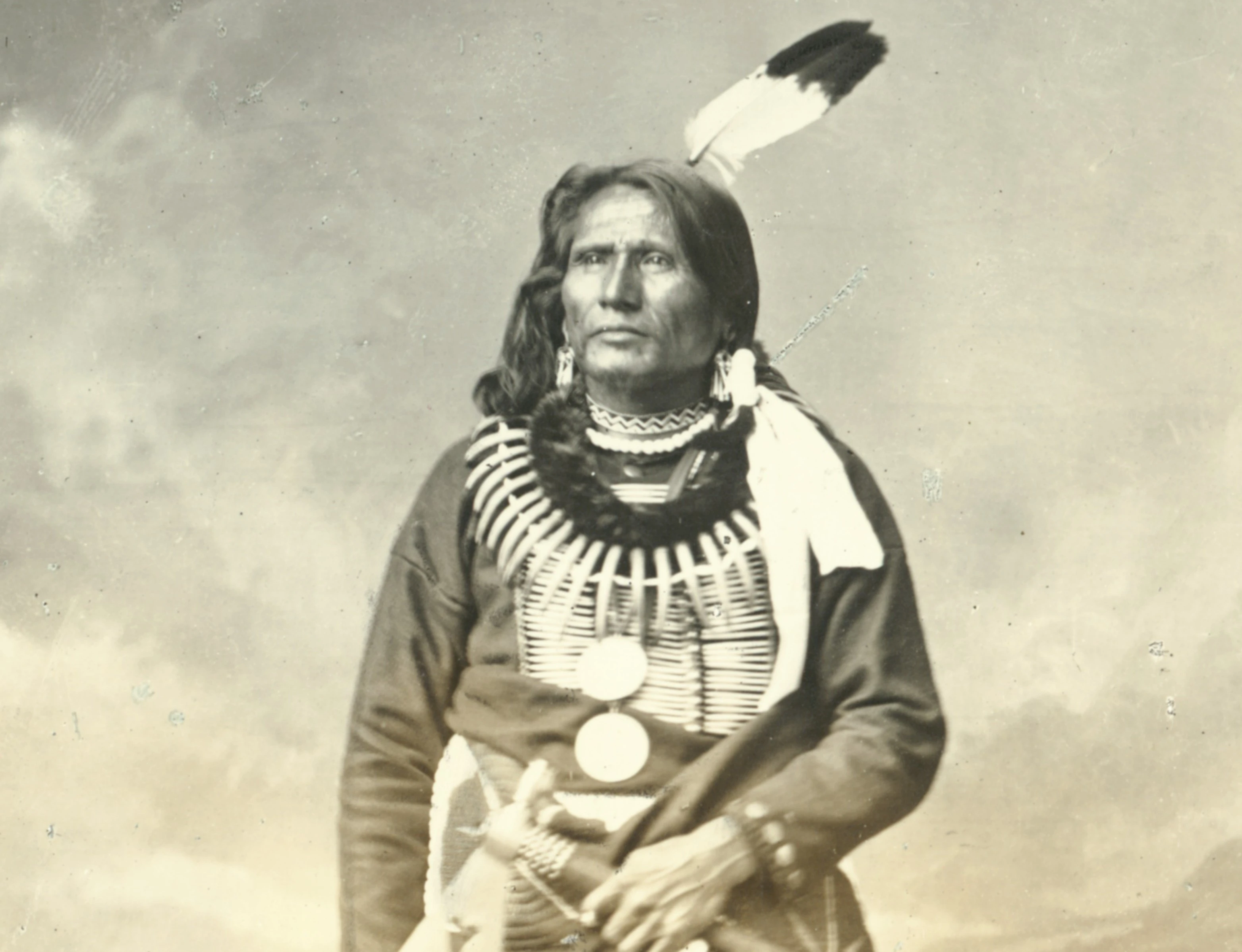
Assaults against our humanity by the US government compelled our war leaders to make difficult decisions and form unconventional alliances.
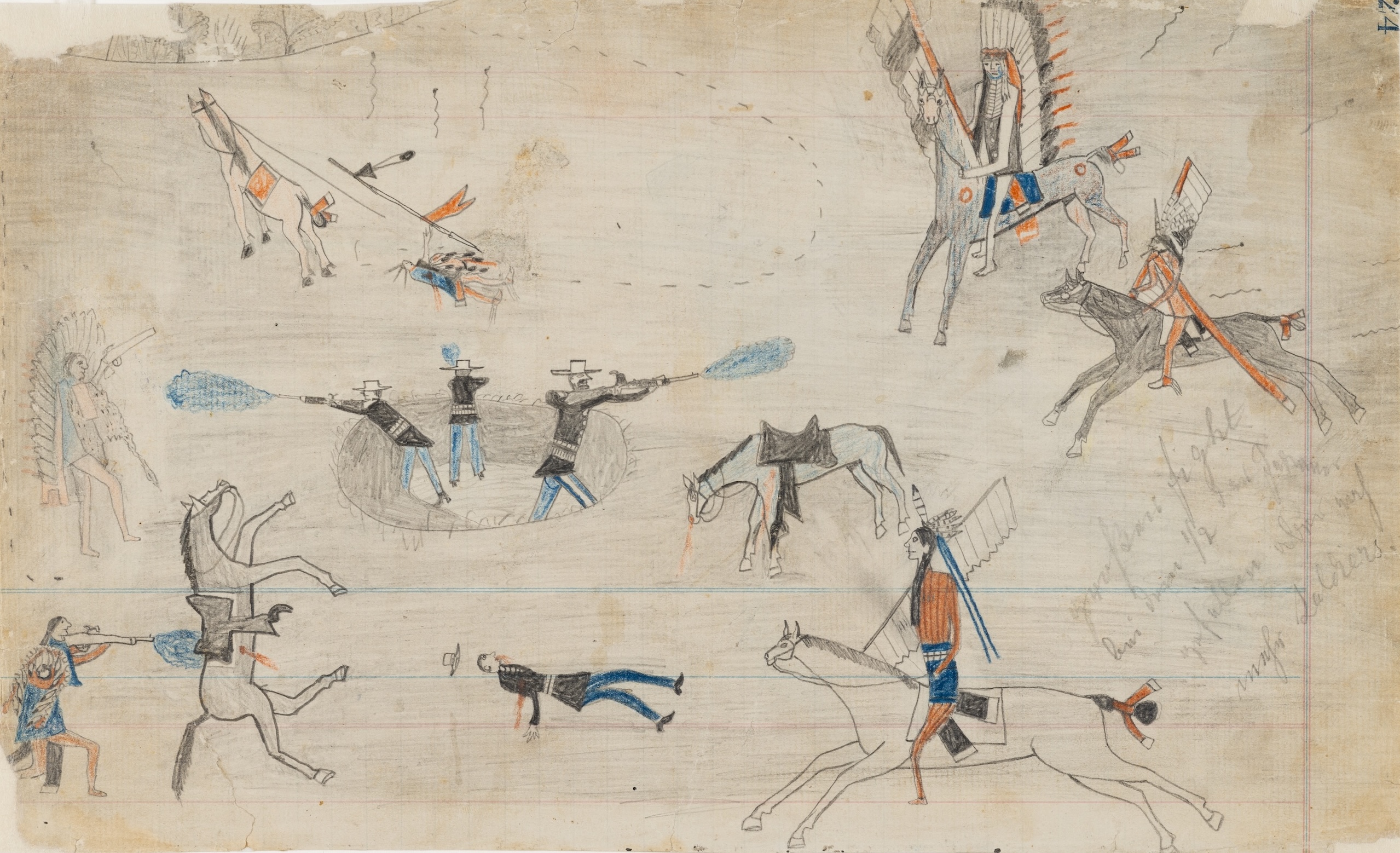
The 🔍Cheyenne and Arapaho joined together, sometimes alongside the Lakota, to fight US forces. Several towns in the Creek Confederacy fought Andrew Jackson in the Creek War of 1813–14. Some Southeastern tribes fought on the side of the South in the Civil War, because the Confederates had promised to return their homelands.
In 1874, 🔍Comanche, 🔍Kiowa, Kiowa Apache, Cheyenne, and Arapaho tribes faced starvation. They suffered seven years of false promises of food rations by the US government.
Searching for food, tribal hunters came upon bison herds slaughtered by white hunters for their hides. The bison were left rotting on the plains. Infuriated by this blatant disregard, the warriors attacked the white hunters. This began the Red River War.
The 4th Cavalry retaliated: attacking the tribes’ winter camps, destroying their homes and food stores, and killing over 1,000 horses.
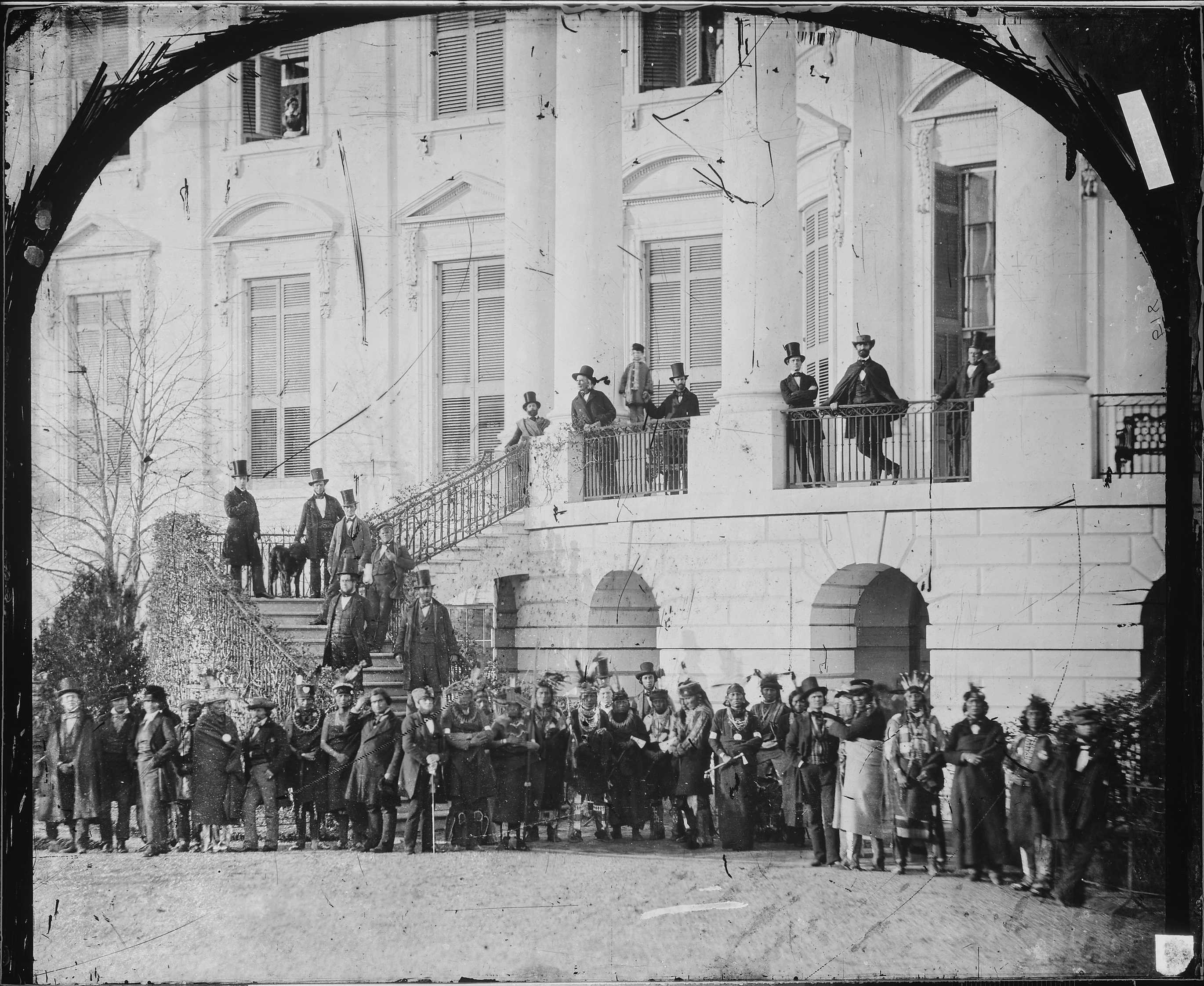
Legal Warriors
Through years of negotiations and diplomatic councils, our leaders gained a deep knowledge of federal Indian law. Since US nationhood, a total of 347 US-Indian treaties were ratified and 97 legal agreements made. This knowledge enabled our leaders to actively protect tribal interests. From the battlefields to courtrooms, our leaders and tribal lawyers have become a protective force. They are the new warriors defending our tribal communities and homelands.
More than 250 major federal laws and well over 100 court cases govern our tribal communities. Using the law, our tribes have learned how to protect our rights, people, and natural resources.
How did Allotment and Assimilation impact tribal nations?
Land Grabs
In 1887, our people were subjected to the General Allotment Act. Congress authorized the president to force First Americans to claim individual allotments of land.
The Dawes Act turned land that had been communally managed by tribal nations into “private property,” owned by individuals. Tribal landholdings were reduced even further.
The act disrupted our relationships to the land, requiring us to adopt capitalism. As a result, tribal families became vulnerable in this new system. Many lost ownership of their land to white people using unscrupulous legal maneuvers.
Individual Allotments: Muscogee (Creek)
Resistance to the 1898 Dawes Act took many forms. Lahtah Micco and Chitto Harjo (Crazy Snake) led the Crazy Snake Rebellion against the government’s allotment process.
They believed that dividing up the land would destroy the 🔍Muscogee (Creek) Nation and other tribes. They could see that assigning allotments to individuals meant segregating families. This interfered with social care and communal farming.
By making land a commodity that could be bought and sold, allotments would also separate the Muscogee people philosophically from the Earth as their mother.
Associated Land: Cheyenne and Arapaho
The 🔍Cheyenne and Arapaho found creative ways to resist the intentions of the Dawes Act. While they reluctantly accepted allotments, families purposely chose homesteads adjacent to their relatives’ homesteads. Some families built a number of homes on one allotment, keeping the rest to use as common property.
US agents objected, but the strategy worked. Instead of accepting the “private property’” policy imposed on them, tribes protected their communal and social lifeways.
Reservation Negotiations: Osage
The 🔍Osage Nation was one of the last tribes to relocate to Indian Territory. Punished for resisting removal, they were forced to take lands that were poorly suited for agriculture.
The tribe negotiated to keep “unassigned lands,” controlling the full scope of their tribal lands. The tribe also kept land ownership and mineral rights, further supporting tribal sovereignty.
Ironically, this “least desired” land made the Osage the wealthiest people in the world when oil was discovered on their reservation in 1897.
“Unassigned Lands”
Federal land grabs, from Removal to Allotment, altered tribal land ownership secured in treaties. The federal government declared these parcels as “Unassigned Land.” This laid waste to Indian Territory, opening up 90 million acres to settlers.
Fueled by the idea of “Manifest Destiny”—that they had a God-given right to expand westward—settlers rushed onto Indian land in the Land Run of 1889.
Assimilation
The effort to assimilate us—to erase all traces of Indian culture and identity and replace it with Euro-American culture—had started in the United States with George Washington. In the 1800s, Assimilation became the American answer to the "Indian problem."
Lawmakers, schools, and churches pushed us to adopt their practices, from farming and formal education to Western religion.
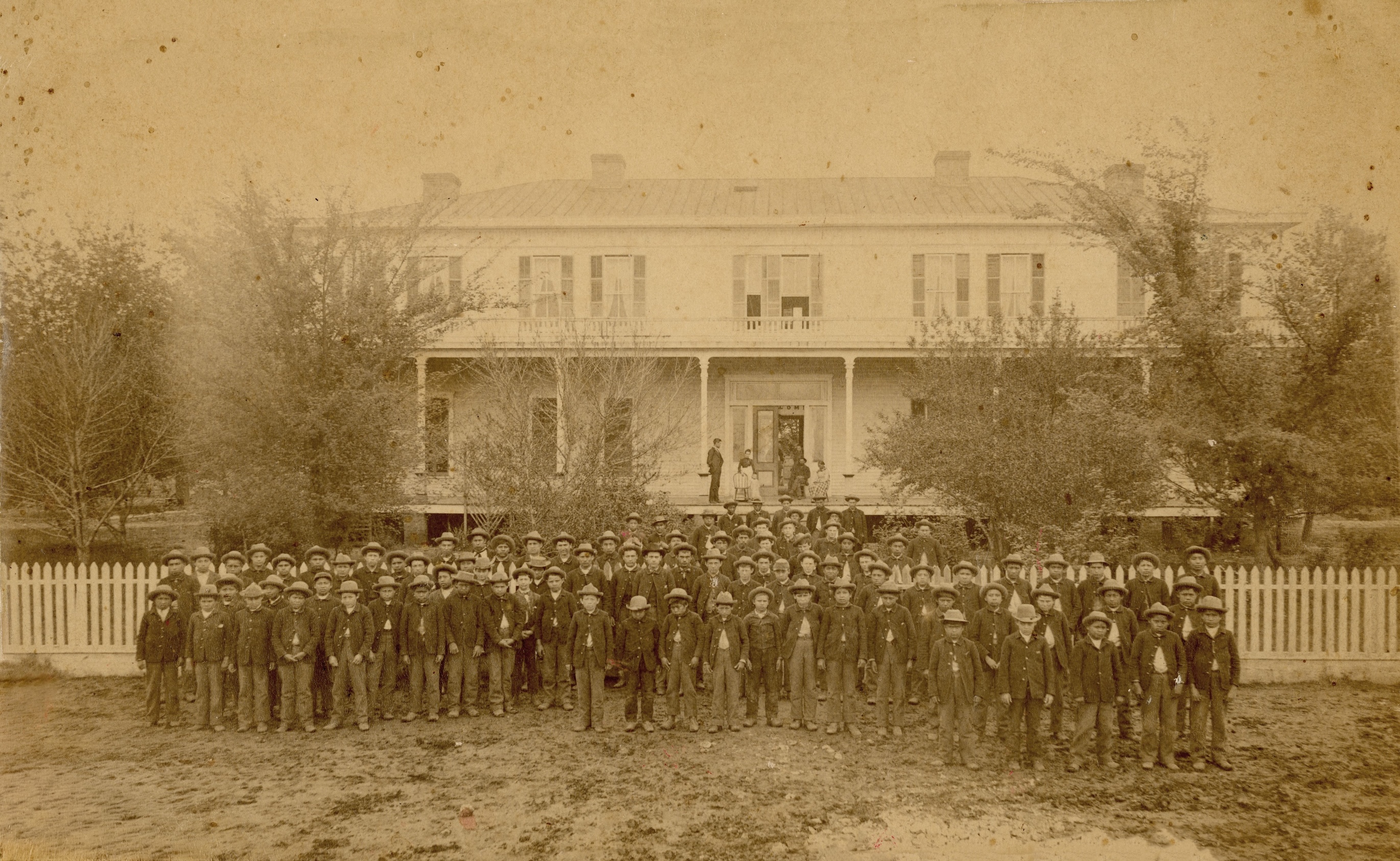
Educating First American Children
Education has always been part of Native American life. We transmit knowledge between generations through our rituals, ceremonies, and customary practices. Some tribes, like the 🔍Cherokee Nation, had school systems prior to Removal and by 1851 were opening seminaries and establishing school districts in Indian Territory.
Many Native people opposed formal classroom education because it taught racist beliefs about Indians. But many others saw the opportunities that formal education would afford us and future generations.
As part of the efforts to assimilate us—to erase all traces of our cultures and identity and replace it with Euro-American culture–federal policies allowed government agents and missionaries to forcibly remove children as young as two years old from their homes.
Many boarding schools were based on the Carlisle Indian Industrial School founded by Captain Richard H. Pratt, who had overseen Indian prisoners of war at Fort Marion. Pratt merged education with military strictness. Boys were trained as farmers and laborers. Girls were trained as domestic workers.
Though most boarding schools were closed in the 20th century, several remain in Oklahoma: Sequoyah High School operated by Cherokee Nation, Jones Academy operated by 🔍Choctaw Nation of Oklahoma, and Riverside Indian School operated by the US Department of the Interior.
State of Sequoyah
Invoking the blessing of Almighty God and reposing faith in the Constitution and Treaty obligations of the United States, we, the people of the State of Sequoyah, do ordain and establish this Constitution.
— Preamble from the State of Sequoyah Constitution, 1905
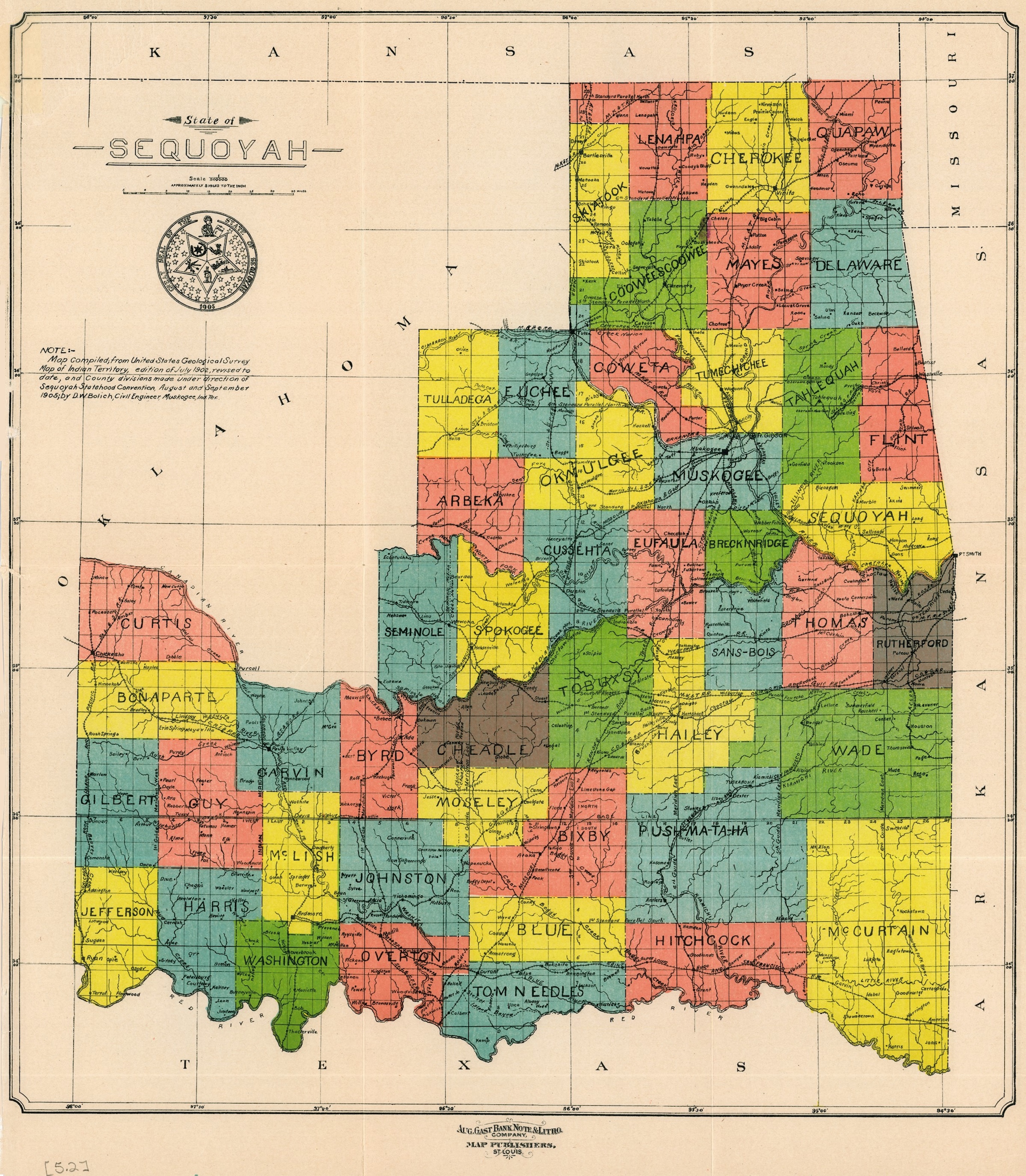
There were two attempts to create an all-Indian state that predate the State of Oklahoma.
In the first attempt in 1867, tribal leaders from Indian Territory and Oklahoma Territory met in Okmulgee to draft a constitution but could not come to agreeable terms. Afterward, many tribes opposed local and national efforts for statehood.
However, the Curtis Act of 1898 terminated tribal governments on March 4, 1906. With this deadline approaching, tribes relented to the establishment of a state.
Because of the failed earlier attempt to unify Indian and Oklahoma Territories, the 🔍Cherokee, 🔍Chickasaw, 🔍Choctaw, 🔍Muscogee Creek, and 🔍Seminole nations (often called “the Five Tribes”) agreed to the establishment of the State of Sequoyah in Indian Territory.
Despite heavy lobbying, the bill lost traction when President Theodore Roosevelt said he would prefer a larger, single state that included Oklahoma Territory.
Resisting Assimilation
The difficult years between Removal, Allotment, and Assimilation were challenging to First Americans. Many tribal people feared our cultures would not survive. We worried that our children would lose their identities. Families survived many hardships. We lost our loved ones and our homes, and we lost our children to boarding schools. Every tribe experienced significant losses.
Some communities held fast to their cultural practices. For others, survival meant putting away their old tradition and embracing new ones, such as the Native American Church. Still others embraced American social customs, believing it was necessary for their children’s survival and prosperity. These complex and difficult choices produced a spectrum of Native identities.
Our Culture Continues
Against great odds, our people survived Indian Removal.
We turned to each other and drew strength from our cultures to rebuild families, communities, and governments. We were sustained by our core cultural values and beliefs. We revitalized old ways in a new home. Some practiced old ceremonies and customs, while others created new ones.
The ways our families adapted, using our tribal values to meet our contemporary circumstances, enabled us to resist the very systems designed to extinguish our cultural lifeways.
Essential Questions
✏️ Use this organizer to address the Essential Questions raised in this section.